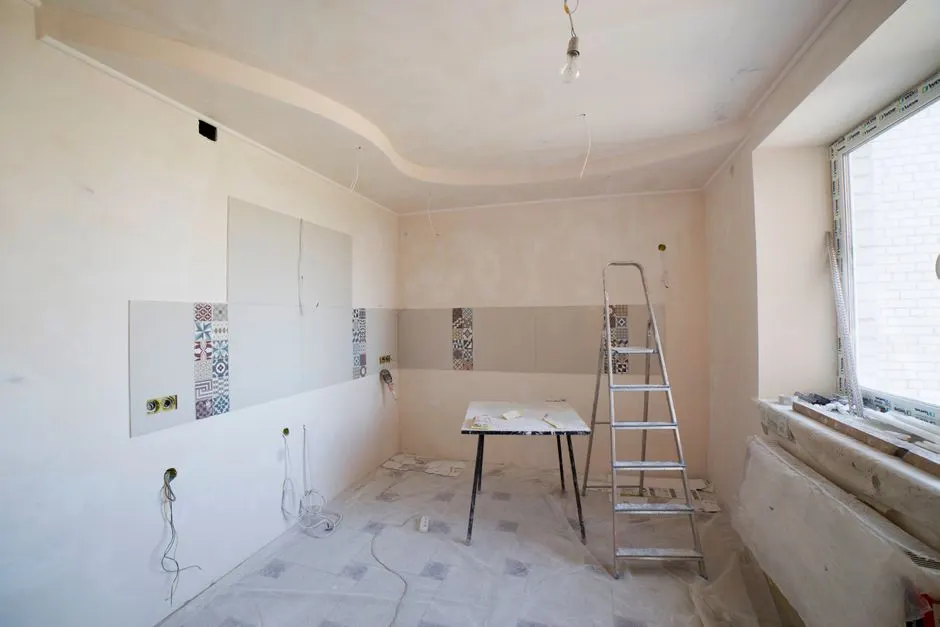
Before you hire a ceiling repair pro in Fort Pierce, check four things: a current Florida state license, active liability and workers' compensation insurance, moisture meter readings that prove the ceiling is dry, and a written price that separates repair from drying. Skip any one of those and you are gambling on a patch that fails the next time it rains. The rest of this post walks through each check, what a fair 2026 price looks like in St. Lucie County, and the questions that separate a real ceiling contractor from a guy with a ladder and a bucket of joint compound.
We run these same checks on our own jobs, and we have watched homeowners in Fort Pierce pay twice for the same ceiling because the first crew never verified the source. Here is how to avoid that.
Verify the license and insurance before anything else
In Florida, any ceiling repair over a certain dollar threshold requires a licensed contractor, and the license number is public record. Ask for it, then look it up on the Florida Department of Business and Professional Regulation (DBPR) website. A legitimate ceiling repair contractor in Fort Pierce will hand you the number without hesitation.
What you are looking for:
- License type and status. A general contractor (CGC), building contractor (CBC), or residential contractor (CRC) license covers ceiling drywall and structural repair. A handyman license does not.
- Active status. Licenses expire. Check the expiration date, not just that the number exists.
- Liability insurance. Ask for a certificate of insurance with your address listed as the job site. Minimum $1 million in general liability is standard for residential work in this area.
- Workers' compensation. If a worker falls off a ladder in your living room and the company has no workers' comp, your homeowner's policy can be on the hook. Ask for the policy number and carrier.
We carry both, and we email the certificates before the first visit. If a company cannot produce them within an hour, that is your answer.
One more thing: ask how long they have been working in St. Lucie County. A crew that has never dealt with a 1950s concrete-block house near the Indian River will misread how moisture travels through those walls. Local experience matters more here than a glossy website.
Ask how they find the leak source, not just how they patch it
A ceiling stain is a symptom. The cause is almost always above it: a roof flashing failure, a cracked supply line in the attic, a clogged condensate drain from the AC air handler, or a second-floor shower pan. If the pro you hire only talks about patching drywall, keep calling.
Here is what a proper diagnosis looks like on a Fort Pierce home:
- Moisture meter scan across the entire ceiling plane, not just the visible stain. Water travels sideways along joists, so the wet area is often 2 to 4 feet wider than the discoloration.
- Attic inspection with a flashlight and, if needed, a thermal camera. We check the underside of the roof deck, insulation, and any plumbing penetrations.
- Roof and flashing check if the attic shows water tracking from above. In Fort Pierce, the most common culprits are failed pipe boots and lifted shingles after a summer storm.
- AC condensate line test during the cooling season. A blocked drain line can dump a quart of water an hour into a ceiling cavity.
If the company cannot explain how they will find the source, they are guessing. Guessing leads to a second repair six months later. We handle this as part of our ceiling water damage inspection Fort Pierce FL, which includes moisture mapping and a written summary of what we found and where.
What should a ceiling repair quote in Fort Pierce include?
A ceiling repair quote in Fort Pierce should list four separate line items: water extraction and drying, drywall or panel repair, stain blocking and paint, and any insulation replacement. If the quote is a single lump sum with no breakdown, you cannot tell whether drying is included or whether they plan to paint over a wet ceiling.
Ask specifically about these:
- Drying equipment and duration. A wet ceiling needs 3 to 5 days of air movers and dehumidifiers. If the quote says "drywall repair only," the moisture stays and mold follows.
- Stain blocking primer. Water stains bleed through regular paint. A shellac-based or oil-based blocker is required, and it is a separate line item.
- Insulation replacement. Wet blown-in or batt insulation loses its R-value and grows mold. In an attic ceiling, that insulation has to come out and be replaced.
- Paint match. Ceiling paint is not wall paint. Ask whether they will paint the whole ceiling or just the patch. A spot-painted ceiling shows under side light.
- Debris removal. Who hauls away the old drywall and insulation? Get it in writing.
We write every quote this way, and we walk you through it before you sign anything. Upfront pricing means you know the number before we start, not after.
Moisture readings and drying: the step most homeowners skip
Ask the pro to show you moisture meter readings before and after the job. A dry ceiling reads below 15% on a pin meter. A wet one reads 25% to 40%. If the company does not own a moisture meter, they cannot verify their own work.
Drying a ceiling in Fort Pierce takes longer than most homeowners expect because of our humidity. In July and August, outdoor relative humidity sits between 75% and 90%. That means open windows do not dry anything. You need mechanical dehumidification and directed air movement.
We run ceiling structural drying Fort Pierce FL with commercial LGR dehumidifiers and axial air movers, and we log readings each day. A typical 12x12 ceiling cavity takes 3 to 4 days. If the source was a slow leak that soaked the insulation, plan on 5 days.
If the ceiling has been wet for more than 48 hours, mold is already growing. We test for it and, when it is present, handle ceiling mold remediation Fort Pierce FL before any drywall goes back up. Painting over mold is the most expensive mistake we see.
How much should you pay a ceiling repair pro in Fort Pierce?
Typical 2026 pricing in Fort Pierce runs $350 to $800 for a small drywall patch and paint, $1,200 to $2,800 for a full ceiling section replacement with drying, and $3,500 to $7,000 or more if structural repair, insulation replacement, and mold remediation are all needed. Those ranges assume a licensed contractor with insurance and proper drying equipment.
Here is how the numbers break down:
- Emergency call-out (nights, weekends): $150 to $300 surcharge on top of the repair.
- Water extraction and drying: $400 to $1,200 depending on ceiling square footage and days of equipment use.
- Drywall repair and finish: $3 to $6 per square foot installed, taped, and textured.
- Stain blocking and ceiling paint: $1.50 to $3 per square foot.
- Insulation replacement: $2 to $4 per square foot for blown-in, more for spray foam.
- Mold remediation: $1,500 to $4,000 for a contained ceiling area.
If a quote comes in at half these numbers, ask what is missing. Usually it is drying, insulation, or insurance.
Common mistakes Fort Pierce homeowners make when hiring
The single most common mistake is hiring on price alone and skipping the drying step. A $400 patch on a wet ceiling becomes a $3,000 mold job within a month.
Other mistakes we see regularly:
- Not checking the license. Unlicensed work can void your homeowner's insurance claim and create a disclosure problem when you sell.
- Paying a large deposit upfront. A deposit of 10% to 20% is normal. Fifty percent upfront is a red flag.
- Letting the pro skip the attic. If they never go above the ceiling, they never found the leak.
- Ignoring the second stain. Two stains usually mean two sources, or one source traveling along a joist.
- Hiring a roofer to fix a ceiling. Roofers fix roofs. Ceiling repair is a separate trade with separate drying and finishing steps.
We have re-done work from all five of those scenarios. Each one cost the homeowner more than doing it right the first time.
When to call a professional
Call a professional the moment you see a ceiling stain larger than a dinner plate, a sagging section, or any active drip. Those three signs mean water is still moving, and every hour adds damage.
Small hairline cracks from settling are a different story. You can patch those yourself. But if the crack is wider than a credit card, if the ceiling feels soft when you press it, or if you smell a musty odor in the room, stop and call us.
Our team at Ceiling Water Damage Repair Fort Pierce handles the whole sequence: find the source, extract the water, dry the cavity, remediate mold if needed, replace the drywall or panel, and repaint the ceiling. One crew, one invoice, no handoffs. We serve homeowners across the Treasure Coast, including older riverfront homes near Ceiling Water Damage Repair in Downtown Fort Pierce where 1920s construction and modern AC systems create predictable leak patterns.
If your ceiling damage came from a named storm, we also handle hurricane water damage ceiling repair Fort Pierce FL and can document the damage for your insurance adjuster.
Frequently Asked Questions
What should I check before hiring a ceiling repair pro in Fort Pierce?
Check four things: a current Florida DBPR license, active liability and workers' comp insurance, moisture meter readings before and after the job, and a written quote that itemizes drying, repair, and paint. Missing any one of those is a reason to keep looking.
How do I verify a ceiling repair contractor is licensed in Fort Pierce FL?
Ask for the license number, then search it on the Florida DBPR website. Confirm the license type is CGC, CBC, or CRC and that the status is active with a future expiration date. Request the insurance certificate at the same time.
What questions should I ask a ceiling repair company in Fort Pierce?
Ask how they find the leak source, how many days they will dry the ceiling, what moisture reading counts as dry, whether stain-blocking primer and insulation replacement are included, and who hauls away debris. A good crew answers all five without checking with a supervisor.
How much should I pay a ceiling repair pro in Fort Pierce?
In 2026, expect $350 to $800 for a small patch, $1,200 to $2,800 for a full ceiling section with drying, and up to $7,000 if mold remediation and insulation replacement are needed. Anything far below those ranges usually means drying or insurance was left out.
Does ceiling water damage always mean mold?
No, but mold starts growing within 24 to 48 hours of a wet ceiling. If the leak was caught the same day and the cavity dries within 3 to 4 days, mold is unlikely. Beyond that, plan on testing and possible remediation.
Get help with Ceiling Water Damage Repair in Fort Pierce
If your ceiling is stained, sagging, or dripping, we can be at your door today. We find the source, dry the cavity, and repair the ceiling so it does not come back.
Call Ceiling Water Damage Repair Fort Pierce at 772-362-4722 for a same-day inspection and an upfront price before any work begins.