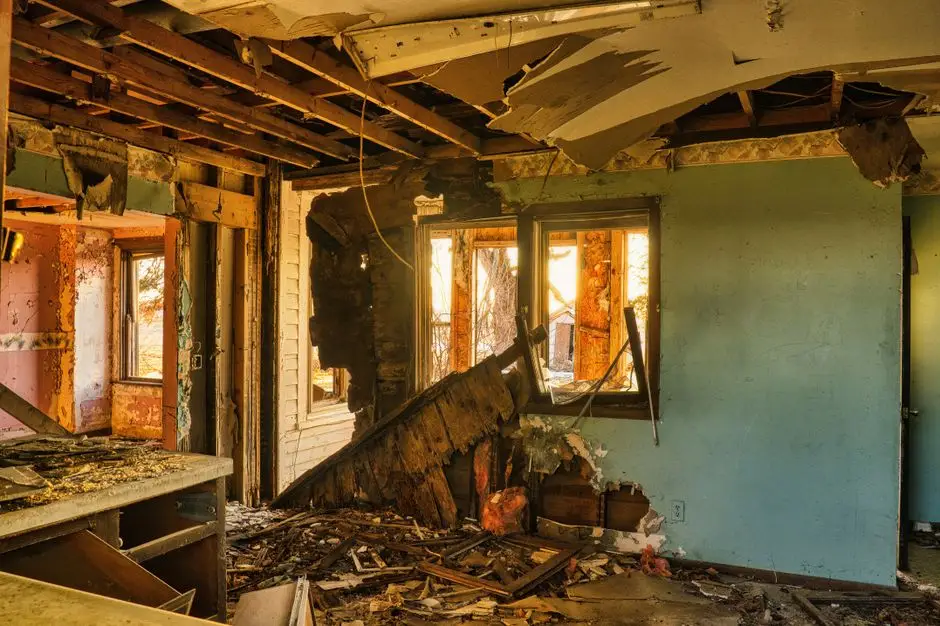
A brown ceiling stain that keeps getting bigger means water is still actively entering your ceiling from above, and the stain will not stop spreading until that water source is found and shut off. The brown color comes from tannins, insulation dust, and rust particles the water picks up as it travels through your attic, roof deck, or the floor assembly of the level above. In Fort Pierce, the most common culprits are roof flashing failures, AC condensate line clogs, and plumbing supply leaks in older homes. This article walks through why the stain grows, what each cause looks like, and how to stop it before the drywall sags or mold sets in.
Why is my ceiling stained brown and getting bigger is one of the most common calls we get, and the answer is almost always the same: the leak is still running. A stain that appeared once and dried out is a past event. A stain that grows week over week is a live problem.
Why a brown ceiling stain keeps getting bigger
A brown ceiling stain getting bigger Fort Pierce homeowners notice usually means water is wicking outward through the drywall paper and gypsum core, not just dripping from one point. Drywall is porous. When water enters from above, it spreads horizontally through the panel until it hits a joist or a seam, then travels along that edge. That is why a stain that started the size of a quarter can be the size of a dinner plate in two weeks.
The brown color itself is a clue. Clean water from a supply line usually leaves a pale yellow or tan ring. Brown or rust-colored stains point to water that has traveled through wood framing, roof sheathing, or old galvanized pipe. In Fort Pierce homes built before 1980, we often see brown stains tied to cast iron drain lines or rusted roof nails that have been seeping for months.
Three things make a stain grow faster:
- Continuous slow leaks - a pinhole in a supply line can push 1-2 gallons per day into your ceiling.
- Intermittent leaks - AC condensate that only overflows when the system runs hard in July and August.
- Roof leaks that reactivate - flashing that only leaks during wind-driven rain from the east, which is common during hurricane season.
If you are seeing a ceiling water stain spreading Fort Pierce FL residents describe as "creeping" rather than dripping, the water is likely traveling along a joist or a duct chase before it shows on the ceiling. That makes the visible stain a poor guide to where the actual leak is.
What causes brown ceiling stains in Fort Pierce
Brown ceiling stain cause Fort Pierce varies by neighborhood and building age, but the same five sources show up again and again in our inspection logs. Here is what we find, roughly in order of frequency.
1. Roof and flashing leaks
Fort Pierce gets roughly 55 to 60 inches of rain per year, with most of it falling between June and October. Roof penetrations - vent pipes, chimney flashing, and valley seams - take the brunt of it. A single failed pipe boot can send water into your ceiling for months before the stain shows. After a named storm, we see a spike in calls from Hutchinson Island South ceiling water damage repair requests, where wind-driven rain finds every weak point in the roof assembly.
2. AC condensate line clogs
Your air handler produces 5 to 20 gallons of condensate per day in summer. If the drain line clogs with algae - which happens fast in Florida humidity - the pan overflows into the ceiling below. This is the single most common cause of brown ceiling stains in Fort Pierce homes with the air handler in the attic.
3. Plumbing supply and drain leaks
A failing supply line under a bathroom or kitchen can drip for weeks. So can a loose toilet flange or a cracked shower pan. Water follows the path of least resistance, which is often the ceiling below the bathroom.
4. Second-floor overflow and appliance failures
Washing machine hoses, water heater tanks, and dishwasher lines all fail eventually. A water heater with a slow tank leak on the second floor or in a closet can produce a brown stain on the ceiling below for months before the tank actually bursts.
5. Hurricane and storm intrusion
Even a tropical storm can push water through soffits, ridge vents, and window frames. If your stain appeared after a storm, we treat it as storm damage until proven otherwise. Our team handles hurricane water damage ceiling repair Fort Pierce FL regularly, and the first step is always tracing the entry point.
Is a growing brown ceiling stain a sign of water damage?
Yes. A brown ceiling stain that is actively getting bigger is a sign of active water damage in Fort Pierce, and it should be treated as an urgent problem rather than a cosmetic one. The stain is the visible symptom; the damage behind it - saturated insulation, wet framing, and potential mold growth - is the real issue.
Here is what we look for when we inspect a growing stain:
- Soft or spongy drywall - if the ceiling gives when you press it, the panel is saturated and needs replacement.
- Sagging - a sagging ceiling means the drywall has lost structural integrity and could fall.
- Musty odor - mold can colonize wet drywall in 24 to 48 hours in Florida humidity.
- Paint bubbling or peeling - water is pushing the paint off from behind.
- Visible mold - dark spots or fuzzy growth near the stain edge.
If you see any of these, the ceiling needs more than paint. Our ceiling water damage inspection Fort Pierce FL uses moisture meters and thermal imaging to map how far the water has traveled, so we know exactly what to replace and what can be dried in place.
How to stop a brown ceiling stain from spreading
Stopping a brown ceiling stain from spreading Fort Pierce requires three steps in order: find the source, stop the water, and dry the assembly. Painting over a stain without fixing the leak is the fastest way to turn a $400 repair into a $4,000 mold remediation.
Step 1: Find the source
We start at the ceiling and work up. Moisture meters, thermal cameras, and a careful look at the attic above tell us whether the water is coming from the roof, a plumbing line, or the AC system. This step usually takes 30 to 60 minutes.
Step 2: Stop the water
Depending on the source, this might mean repairing a roof boot, clearing a condensate line, replacing a section of supply pipe, or resealing a shower pan. We do not leave until the source is confirmed dry.
Step 3: Dry and repair
Wet insulation and saturated drywall have to come out. We use ceiling structural drying Fort Pierce FL equipment - industrial dehumidifiers and air movers - to bring the framing and surrounding materials back to normal moisture levels, usually in 3 to 5 days. Then we replace the drywall, texture, and paint.
For stains that are cosmetic only - meaning the leak is fixed and the drywall is sound - ceiling stain removal Fort Pierce FL uses a shellac-based primer and stain-blocking paint to permanently cover the discoloration. Standard latex paint will not do it; the tannins bleed through within weeks.
Common mistakes homeowners make with ceiling stains
Most of the expensive ceiling repairs we do in Fort Pierce start with one of these mistakes. Avoiding them can save you thousands.
- Painting over the stain without fixing the leak. The stain comes back within weeks, and the water keeps damaging the ceiling above.
- Assuming it is just a roof leak. In our experience, roughly 40% of growing ceiling stains in Fort Pierce come from AC condensate or plumbing, not the roof.
- Poking a hole to "let the water drain." This can cause a ceiling collapse if the drywall is already saturated. If the ceiling is bulging, call us first.
- Waiting until the stain stops growing. It will not stop on its own. Water always finds a way through.
- Ignoring the attic. The stain is on the ceiling, but the problem is almost always above it. If you have not looked in the attic, you are guessing.
One more: do not assume your insurance will cover it. Most Florida policies cover sudden and accidental water damage but exclude long-term seepage. The sooner you document the leak and call a professional, the better your claim will go.
When to call a professional
Call a professional the moment a brown ceiling stain starts getting bigger, especially if you cannot find the source within an hour. Ceiling water damage in Fort Pierce moves fast because of the humidity. What looks like a small stain on Monday can be a sagging, moldy panel by Friday.
We handle the whole job: leak detection, water extraction, structural drying, mold remediation if needed, and drywall repair. If the stain is from a storm or hurricane, we document everything for your insurance claim. If it is from a plumbing or AC issue, we fix the source and restore the ceiling.
If you are in one of the older neighborhoods near the river, we also see a lot of Downtown Fort Pierce ceiling water damage repair calls tied to aging plumbing and original 1920s roof framing. Those homes need a careful eye because the water can travel further than it does in newer construction.
Our team at ceiling water damage repair Fort Pierce is available for emergency calls, and we can usually be on site the same day. We give you a clear price before we start, and we do not leave until the ceiling is dry and the source is fixed.
Frequently Asked Questions
Why is my ceiling stained brown and getting bigger in Fort Pierce?
Because water is still entering your ceiling. The stain grows as the water spreads through the drywall. Common sources in Fort Pierce are roof leaks, AC condensate overflows, and plumbing drips. The stain will keep growing until the source is found and stopped.
Is a growing brown ceiling stain a sign of water damage in Fort Pierce FL?
Yes. A brown stain that is actively expanding means active water damage. In Fort Pierce humidity, mold can start in 24 to 48 hours. If the ceiling is soft, sagging, or smells musty, call a professional immediately.
How do I fix a brown ceiling stain in Fort Pierce?
First, find and fix the leak. Then dry the ceiling assembly with dehumidifiers and air movers for 3 to 5 days. Finally, repair or replace the drywall and use a shellac-based primer before painting. Painting over an active leak will not work.
Should I worry about a brown ceiling stain in Fort Pierce?
Yes, if it is growing. A static stain from an old, fixed leak is cosmetic. A growing stain means water is still coming in, which can lead to mold, sagging drywall, and structural damage. Get it inspected within a few days.
How much does ceiling water damage repair cost in Fort Pierce?
Typical 2026 pricing in this area runs $350 to $900 for stain removal and minor drywall repair, $1,200 to $3,500 for water extraction and structural drying, and $2,500 to $8,000 if mold remediation or ceiling replacement is needed. Emergency and storm-related work can run higher.
Get help with Ceiling Water Damage Repair in Fort Pierce
If your ceiling stain is getting bigger, do not wait. We find the leak, stop it, dry the ceiling, and repair the damage so it does not come back. Call Ceiling Water Damage Repair Fort Pierce at 772-362-4722 for same-day service.